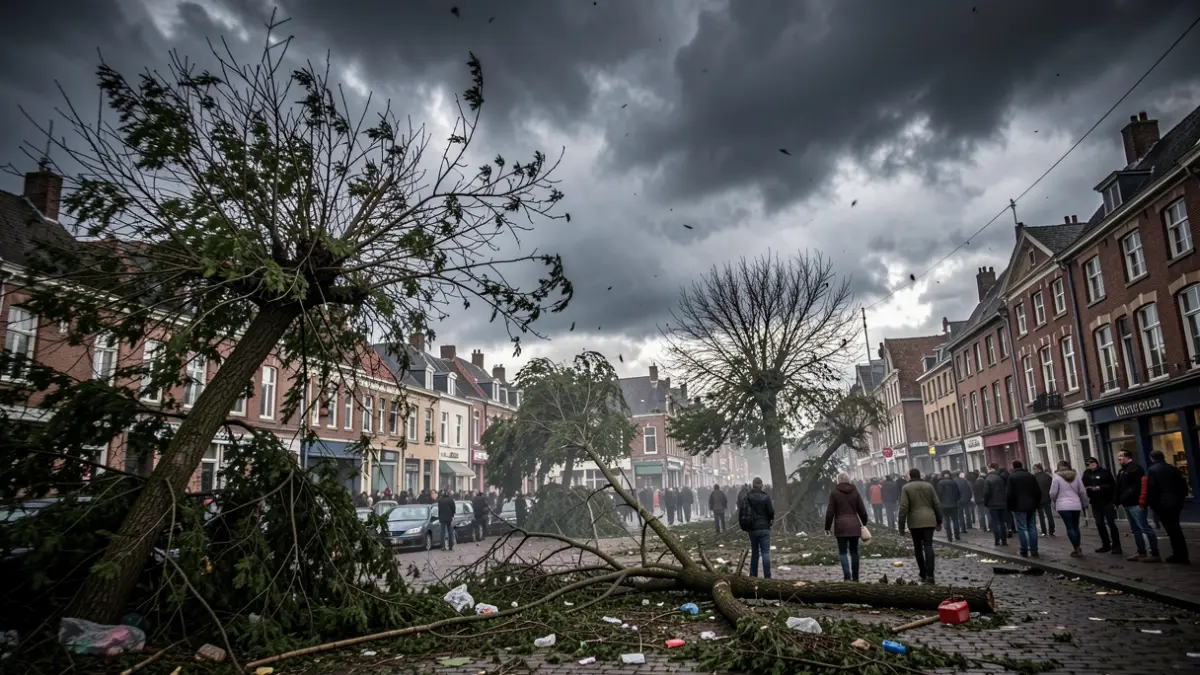
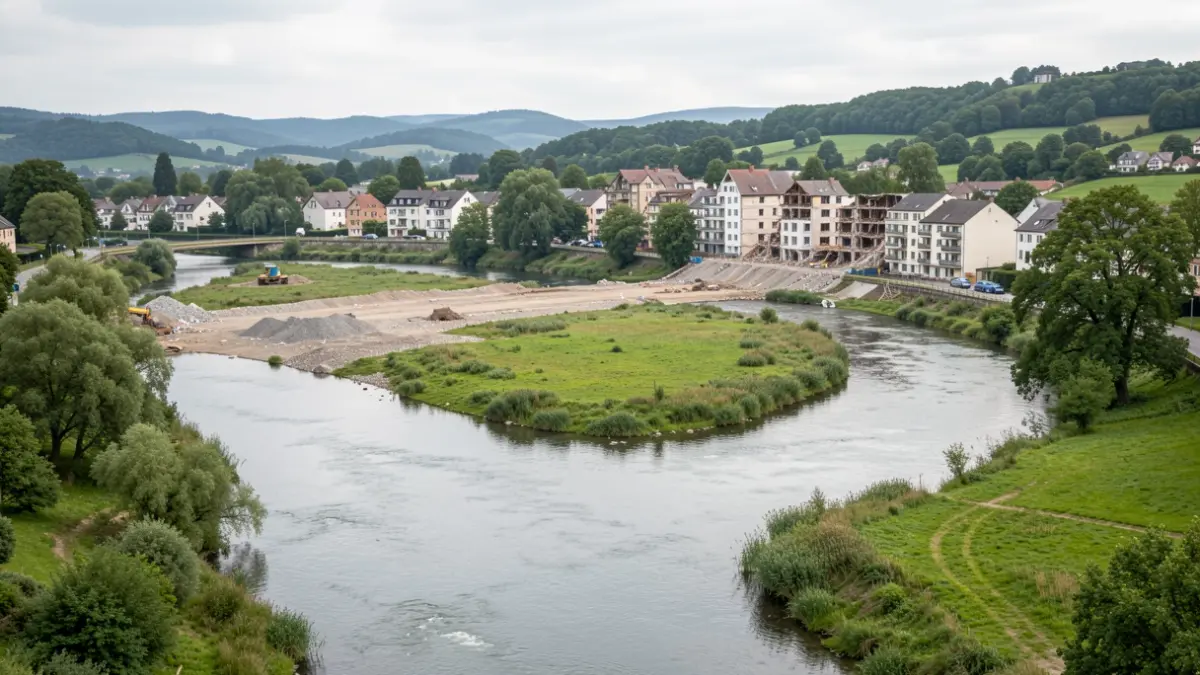
The devastating floods of July 2021 left deep scars across Wallonia, particularly affecting homes along the Vesdre river in Chaudfontaine. In response, the municipality made the strategic decision to transform a high-flood-risk area. This project, part of the Walloon program "Sustainable Neighborhoods," aims to better prepare the territory for future climate events.
In Avenue des Thermes, between the Casino bridge and the Chaudfontaine company bridge, 27 residences were acquired by the municipality. Their progressive demolition will allow the Vesdre river to regain vital space during flood episodes. Work, which began in February 2024, is currently ongoing. These demolitions are coupled with the development of a new leisure dike, thereby strengthening the connection between residents and their river.
This initiative follows a logic of working with nature rather than against it. Unlike past urban developments that tended to confine watercourses, this approach allows the river more space during significant flow increases. This method, adopted in several European regions, enhances the valleys' adaptation capacity to extreme climate events, while balancing safety, quality of life, and the presence of nature in urban areas.
Climate change is intensifying the frequency and severity of extreme weather events. Communities must adapt their infrastructure. By giving the Vesdre river more space and transforming a vulnerable sector, Chaudfontaine demonstrates concrete adaptation to climate challenges, reducing risks and improving residents' living environment.
This project contributes to Sustainable Development Goal 13 (SDG 13) on climate action. It shows that climate action includes adapting territories to the already observable consequences of climate change, strengthening the resilience of local communities to climate hazards by rethinking the management of the Vesdre's banks to better face future floods.