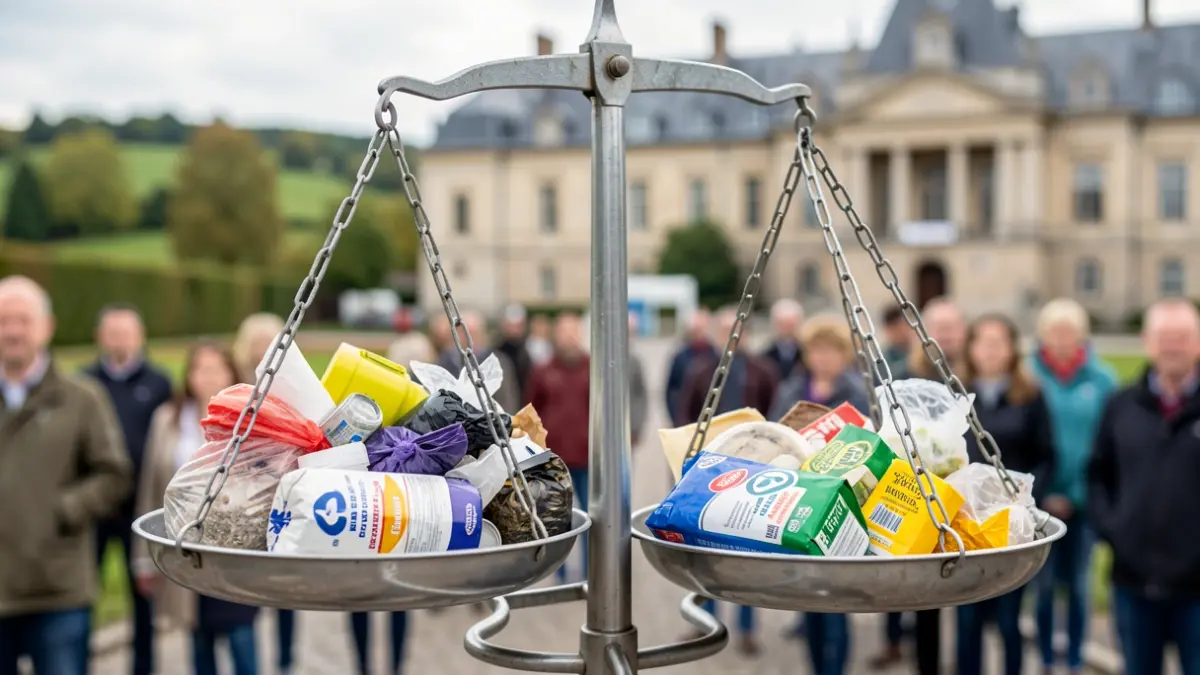
The Board of Directors of in BW unanimously approved on Wednesday, September 23rd, the 2027 tariffs for waste management services provided to its shareholder communes. In 2027, the average cost of these services will increase from 70 to 81 euros per inhabitant per year. This evolution includes increased management costs, the clearing of past deficits, and a provision to anticipate potential technical issues at the Virginal Energy Recovery Unit.
For several years, waste management intercommunals in Wallonia have faced a significant rise in their charges: salary indexation, fuel, energy, waste transport and treatment, increased cost of consumables, reduction in certain subsidies, new environmental obligations, and necessary infrastructure investments. Inflation alone accounts for an additional 17.90 euros per inhabitant in costs between 2020 and 2027.
In response to these cost increases, in BW has implemented several measures to control expenses. Reducing the frequency of residual waste collections (every two weeks) has lowered costs and encouraged better sorting, leading to a decrease in residual waste (89 kg/year) and an increase in collected organic waste (27 kg/year). The automation of access control at recycling centers has also reduced waste quantities and transport/treatment costs. These decisions have helped avoid nearly 21 euros in additional costs per inhabitant per year in 2027.
Despite these savings, tariffs will increase by 11.06 euros per inhabitant in 2027. This rise comprises the annual indexation (2 euros), increased costs for paper and cardboard collection (1.15 euro), costs for transfer, pre-treatment, and energy recovery (2.85 euros), the absorption of accumulated losses (2.56 euros), and a provision for the Virginal Energy Recovery Unit (2.50 euros). The recycling center contribution will only be indexed.
The average cost of 81 euros per inhabitant in 2027 remains below the Walloon average, which was approximately 85 euros in 2026. This amount covers collection services, management of recycling centers, glass banks, transport, treatment, and recycling, as well as the repayment of communes' debt to in BW until 2030.
Copidec, the federation of Walloon waste management intercommunals, emphasizes the need for budgetary coherence, calling for any decision affecting local finances to be budgetarily neutral. Inflation, rising energy and raw material costs, and the declining value of recycled materials significantly impact intercommunals, whose management fees represent less than 10% of total costs.
Copidec warns about the impact of regional measures (reduction of APE aid), federal measures (VAT regime), and European measures (CO2 emission trading system for incineration), which could increase the waste tax by up to 19 euros per inhabitant. The federation therefore calls for budgetary neutrality for decisions made at different levels of power, reminding that the citizen ultimately pays the bill.