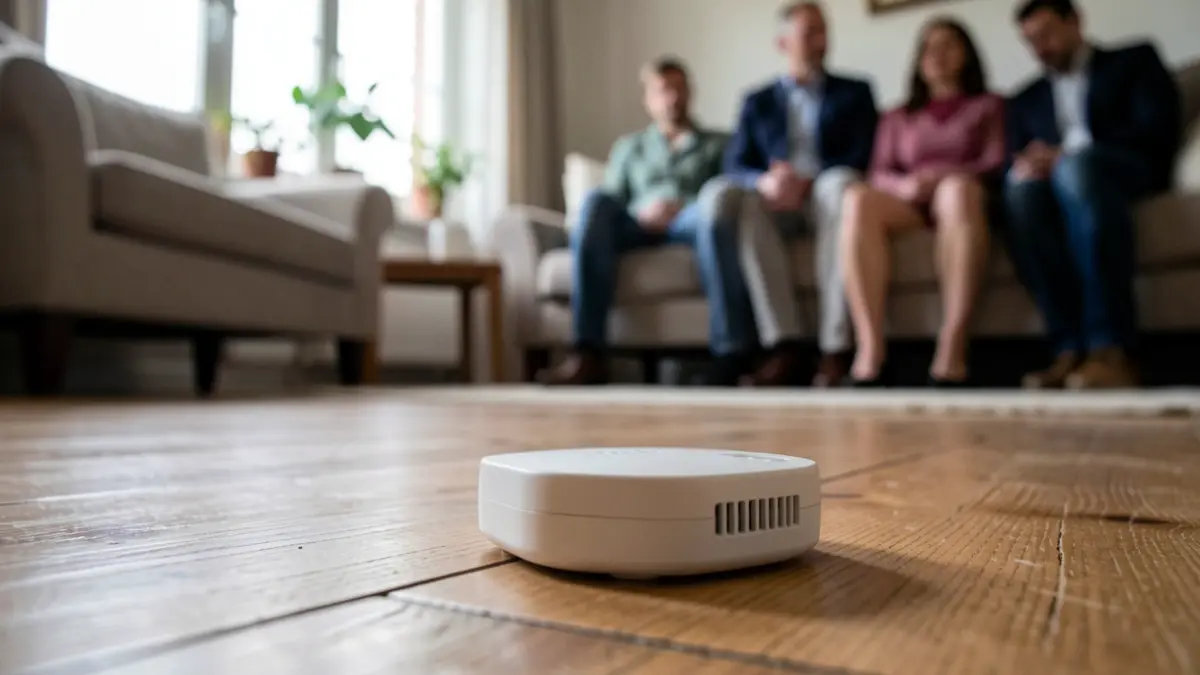
In collaboration with the Federal Agency for Nuclear Control (FANC), other Walloon SAMI services, and the Regional Intervention Cell for Indoor Pollution of Bruxelles Environnement (CRIPI), this initiative encourages citizens to take action against this potentially dangerous radioactive gas.
Radon is a natural radioactive gas found in soils, which can infiltrate buildings. Invisible, colorless, and odorless, it poses no danger outdoors. However, when accumulated in an enclosed space, it is recognized by the World Health Organization (WHO) as the second leading cause of lung cancer after smoking, a risk that is amplified for smokers.
The only way to detect radon is to measure it. A simple detector, orderable via the website actionradon.be for €20 (including analysis), can help determine its presence. It should be placed on the ground floor, in the most frequented room, for three months between October and April.
Following analysis, the Walloon Brabant SAMI will provide personalized advice. Remediation actions can range from sealing radon entry points and improving ventilation to installing radon extraction systems for higher concentrations.
Over 9,000 radon measurements have already been carried out in Walloon Brabant, representing 4.8% of households. The municipalities of Court-Saint-Etienne, Genappe, Mont-Saint-Guibert, and Villers-la-Ville are classified at level 2 (over 5% of measured homes exceed the reference level of 300 Bq/m3). The municipalities of Rebecq, Tubize, Ittre, Nivelles, Waterloo, Lasne, La Hulpe, Rixensart, Wavre, Ottignies-LLN, Walhain, Beauvechain, Jodoigne, and Orp-Jauche are at level 1 (1 to 5% of measurements exceed 300 Bq/m3).