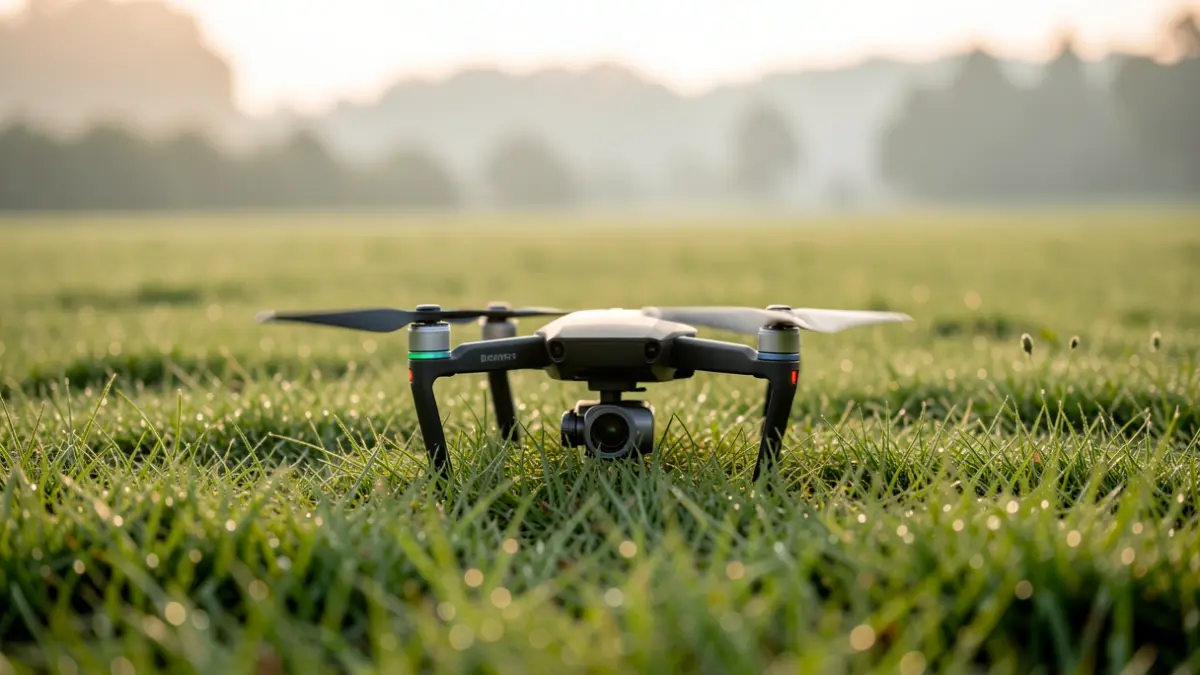
In spring, Walloon meadows become open-air nurseries. Hidden in tall grass, fawns, leverets, and ground-nesting birds find refuge. However, when mowing season begins, their survival instinct can turn into a deadly trap. To prevent these silent tragedies, volunteers from the non-profit Sauvons Bambi patrol the countryside at dawn with drones equipped with thermal cameras.
Founded in 2020, Sauvons Bambi's principle is simple: before agricultural work, volunteers fly drones over fields using thermal cameras. Heat sources detected allow them to locate animals invisible to the naked eye. Fawns, leverets, or birds identified are then safely moved while agricultural operations take place. The association intervenes free of charge upon request from farmers, agricultural contractors, or landowners. The flights are conducted shortly before mowing, when the thermal contrast between animals and their environment is most visible.
Behind each intervention is a growing network of volunteer pilots passionate about nature. Their commitment helps protect wildlife while providing concrete support to the agricultural sector. The initiative also benefits livestock, as carcasses in fodder can promote the development of botulism, a potentially serious disease.
According to information from the project leaders and reported by WWF Belgium, the association saved 834 fawns in Belgium and Luxembourg during 2023. Beyond these rescues, the initiative demonstrates how technology, often associated with other uses, can become a concrete tool for biodiversity protection, enabling rapid intervention over vast areas and preventing the disappearance of many animal populations that are sometimes fragile.
This initiative is a concrete illustration of Sustainable Development Goal 15, which aims to protect and restore terrestrial ecosystems and halt biodiversity loss. It highlights that a significant part of biodiversity plays out in everyday spaces, sometimes just kilometers away, and that concrete solutions exist through cooperation between volunteers, farmers, and citizens to better coexist human activities with nature preservation.