Producing, consuming, heating, eating, or moving with fewer resources while maintaining well-being is a core challenge of Sustainable Development Goal n°12, focused on responsible consumption and production. In Liège, the Low-Tech Studio at the University of Liège provides a concrete experience to explore this issue and envision more sober lifestyles.
Faced with environmental challenges, solutions often emphasize increasingly high-performing technologies. The low-tech movement proposes a complementary approach: first, questioning the needs to be met and seeking the simplest, most accessible, and sustainable solutions. A technology is judged not only on its performance but also on its usefulness, repairability, comprehensibility, and resource efficiency.
This is precisely what the Low-Tech Studio, a project by the University of Liège, showcases. It allows the public to discover concretely how these principles can be applied in daily life. The studio is an experimental apartment of about 45 m², designed as a true ecosystem. Energy production, water management, waste transformation, and food supply are all conceived to meet real needs while limiting resource use. Visitors can find surprising solutions, such as a water-saving shower, a washing machine powered by a rowing machine, or a cooking pot inspired by the Norwegian stove.
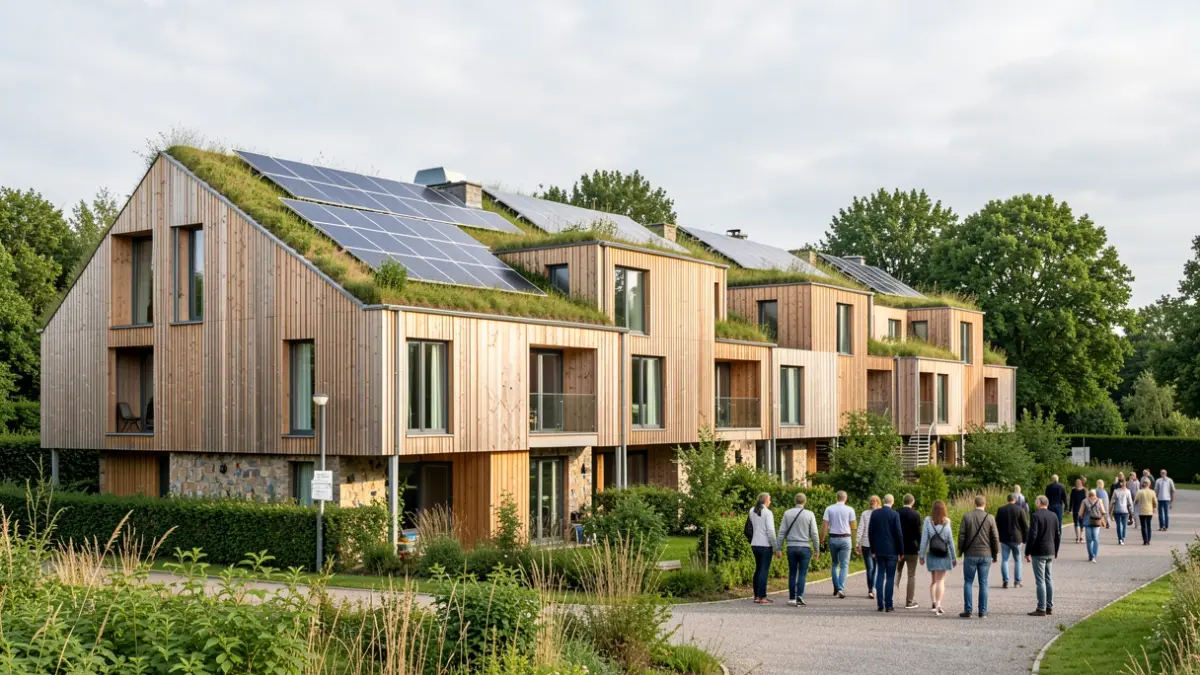
The building itself illustrates this logic, featuring a demountable structure, the use of bio-based or reused materials, and a low weight. This project, carried out by the HELLOW cooperative and its partners, is supported by Wallonia as part of a circular construction initiative.
The value of the Low-Tech Studio lies not only in the objects presented but also in its invitation to rethink our relationship with resources. The goal is not to fully replicate this lifestyle or abruptly change habits, but rather to show that numerous possibilities exist to gradually reduce consumption of water, energy, or raw materials without sacrificing essential services. This progressive approach is a central message, allowing individuals to experiment solutions at their own scale.
By making simple, accessible, and resource-efficient devices visible, the Low-Tech Studio makes a concrete contribution to Sustainable Development Goal n°12. It transforms abstract concepts like sobriety and the circular economy into tangible experiences that anyone can observe, understand, and adapt. Beyond technological innovation, this initiative reminds us that the transition to more sustainable lifestyles also depends on our ability to rethink our needs, uses, and relationship with resources.